Here’s a detailed overview of the toy manufacturing process, broken down into key stages from concept to retail.
Step 1. Concept & Design
-
Idea Generation: Based on market trends, licensing (movie/character tie-ins), age group, or educational value.
-
Concept Art/Sketches: Artists create 2D drawings.
-
Design Engineering:
-
3D Modeling: Using CAD, PROE software for precise dimensions.
-
Prototyping: Early physical models made from clay, resin, or 3D printing.
-
Feasibility Review: Safety, functionality, and manufacturing cost analysis.
-
Step 2. Research & Development (R&D)
-
Safety & Compliance: Ensure design meets regulations (e.g., ASTM F963, EN71, CPSIA).
-
Material Selection: Non-toxic, durable plastics, fabrics, electronics, or sustainable materials.
-
Function Testing: Prototypes tested for durability, usability, and child engagement.
Step 3. Tooling & Molding
-
Tool Creation: Precision molds (usually steel or aluminum) are crafted for injection molding, die-casting, or rotational molding.
-
Sample Approval: First shots from the mold are inspected for quality and accuracy.
Step 4. Production Planning
-
Bill of Materials (BOM): List of all components.
-
Supplier Coordination: Sourcing materials (plastic pellets, fabrics, electronics, packaging).
-
Production Line Setup: Assembly line configuration in the factory.
Step 5. Manufacturing & Assembly
A. Part Fabrication
-
Plastic Parts: Injection molding, blow molding.
-
Fabric/Plush: Cutting, sewing, stuffing.
-
Metal Parts: Die-casting, stamping.
-
Electronic Components: PCB assembly, sensor integration.
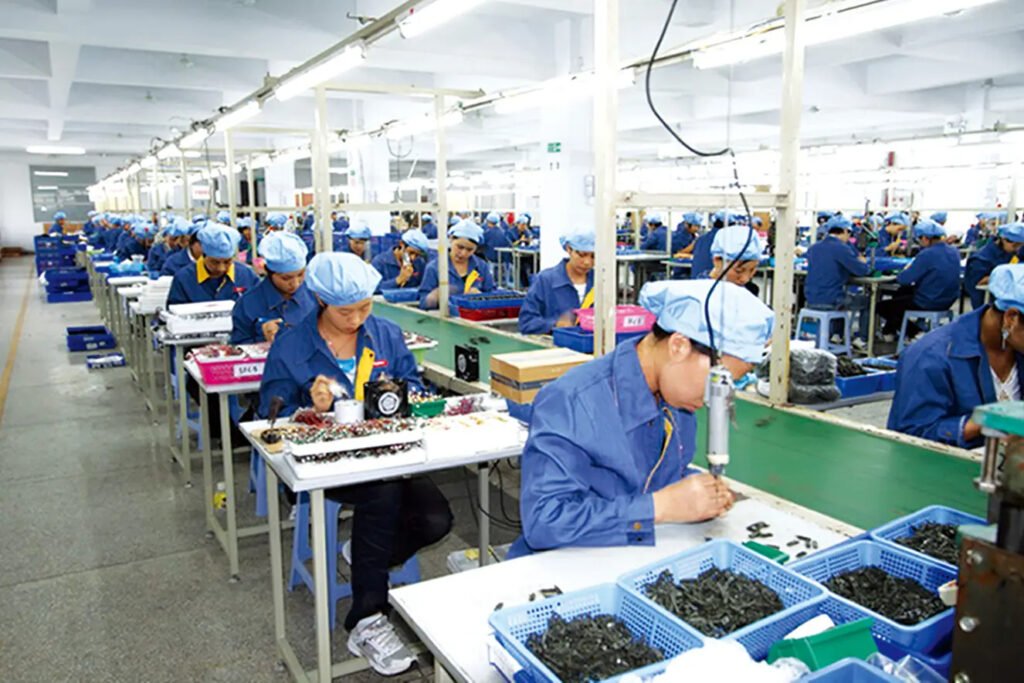
B. Sub-Assembly & Painting
-
Painting, printing, or decorating parts.
-
Sub-assembly (e.g., attaching limbs to a doll, wiring circuits).
C. Final Assembly
-
Manual or automated assembly of all components.
-
Quality checks at each station.
Step 6. Quality Control & Safety Testing
-
Durability Tests: Drop, twist, bite, and stress tests.
-
Safety Checks: Small parts (choking hazard), sharp edges, toxic materials, flammability.
-
Compliance Testing: Third-party labs may certify toys (e.g., CE, UKCA, FCC for electronics).
Step 7. Packaging
-
Design: Attractive, informative boxes with branding, age grading, warnings, and instructions.
-
Automated Packaging: Blister packs, clamshells, or window boxes.
-
Barcoding & Labels: For inventory and retail scanning.
Step 8. Distribution
-
Warehousing: Bulk storage after packaging.
-
Shipping: Transport to distribution centers or directly to retailers worldwide.
-
Retail Placement: Stocked on shelves or listed online.
Key Considerations in Modern Toy Manufacturing
-
Safety & Regulations: Strict adherence to international standards.
-
Sustainability: Biodegradable materials, recycled plastics, and eco-friendly packaging.
-
Technology Integration: Smart toys with apps, Bluetooth, AR/VR.
-
Cost Efficiency: Often manufactured in regions with lower labor costs (Asia, notably China).
-
IP & Licensing: Partnerships with Disney, Marvel, etc., require approval at every stage.
Conclusion: Plastic Action Figure Manufacturing Flow
-
Design → 2. 3D Model → 3. Prototype → 4. Steel Mold Creation → 5. Injection Molding → 6. Painting/Printing → 7. Assembly → 8. Quality Check → 9. Packaging → 10. Ship
This process ensures toys are safe, engaging, and market-ready, balancing creativity with rigorous engineering and compliance standards.