
Of course. While there is significant overlap with general children’s product requirements, the Amazon Compliance Requirements for toys on Amazon have their own specific and critical nuances.
The core principle is that Amazon requires sellers to be experts on the safety of their toys and to prove it with documentation. The consequences for non-compliance are severe: listing removal, shipment destruction, account suspension, and legal liability.
Here is a detailed breakdown of Amazon’s compliance requirements for listing toys.
The Absolute Foundation: Certifications & Testing
You cannot sell toys on Amazon without these documents. They are non-negotiable.
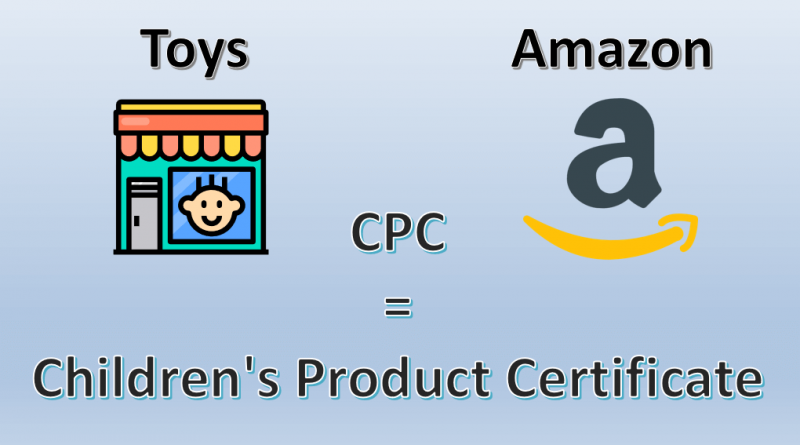
1. The Children’s Product Certificate (CPC)
-
What it is: A legally binding document that you, the importer or domestic manufacturer, create. It is your claim that the product complies with all applicable US safety standards.
-
What it MUST Include:
-
Product name and description.
-
All applicable CPSC safety rules the product complies with (e.g., ASTM F963, CPSIA lead/phthalates).
-
Name and address of the importer or US domestic manufacturer.
-
Contact information for the person maintaining test records.
-
Manufacture date and location.
-
Testing date and location.
-
Identification of the CPSC-accepted third-party lab that conducted the testing.
-
2. Third-Party Testing Report from a CPSC-Accepted Lab
This is the evidence that backs up your CPC. The lab must be accredited to ISO 17025 and accepted by the CPSC for the specific tests required for toys.
Key Standards for Toys:
-
ASTM F963-17 (Standard Consumer Safety Specification for Toy Safety): This is the most critical standard for toys in the US. It covers:
-
Physical & Mechanical Hazards: Prevents choking, laceration, or strangulation risks. This includes:
-
Small Parts: Toys intended for children under 3 years old must not contain or break into small parts. The test uses a “small parts cylinder.”
-
Sharp Points and Edges.
-
Use and Abuse Tests: Simulates drops, bites, and impacts to ensure the toy doesn’t break into hazardous pieces.
-
-
Flammability: Ensures toys do not pose a fire hazard.
-
Heavy Elements Limits: Limits the amount of accessible heavy metals (like antimony, arsenic, cadmium, etc.) in surface coatings and substrates.
-
-
CPSIA (Consumer Product Safety Improvement Act):
-
Lead Content: Surface coatings must contain ≤ 90 ppm; substrates must contain ≤ 100 ppm.
-
Phthalates Content: Certain plasticized components must contain ≤ 0.1% of each of eight specified phthalates.
-
Crucial Note on Age Grading: The tests required are entirely determined by the age grade on your product label and listing. Misrepresenting the age to avoid stricter testing is a serious violation. A teether for 0-18 months is tested more rigorously than a model kit for 13+.
Mandatory Physical Labeling on the Product & Packaging
Your toy must be permanently marked. This is a federal requirement (CPSIA) that Amazon verifies.
-
Tracking Label: This must be permanent (e.g., printed, molded, etched) on the toy and/or its packaging. It must include:
-
Source (Manufacturer/Private Labeler Name)
-
Production Location (City, State, Country)
-
Date of Manufacture (at minimum, month and year)
-
Detailed Batch Information (e.g., batch number, run number, serial number) that allows you to identify the exact production run.
-
-
Warning Labels: If applicable, the toy must have the appropriate hazard warnings. The most common is the “Small Parts” warning for toys intended for children between 3 and 6 years old that have small parts:
“WARNING: CHOKING HAZARD — Small parts. Not for children under 3 yrs.”
-
Other warnings include for marbles, small balls, balloons, etc., as required by the law.
-
Amazon Seller Central Listing Requirements
When creating your ASIN, you must provide accurate information that aligns with your documentation.
-
Item Type and Keywords: You must accurately select the “toy” category or use the correct item type keyword. Do not mis-categorize a toy as a “craft supply” or “collectible” to avoid compliance checks.
-
Images: High-quality images from all angles. For plush toys, an image of the law label is often required.
-
Title and Description: Must accurately reflect the product, its intended age range, and include any necessary safety warnings in the description.
-
Compliance Section: In your seller central listing, you will be prompted to fill out a compliance section where you must declare specific properties (e.g., “Is this a small part?”). Your answers here must match your test report and CPC.
Special Toy Categories with Additional Rules
-
Plush Toys & Stuffed Animals: Require a Law Label (also known as a stuffings label). This is a state-level requirement (e.g., California, New York, etc.) that discloses the materials used for stuffing. Most sellers use a universal law label that satisfies all state laws.
-
Art Materials: Must be certified by a toxicologist that they meet the requirements of the Labeling of Hazardous Art Materials Act (LHAMA), which is based on ASTM D-4236. This ensures they are properly labeled for chronic health hazards.
-
Electrically Operated Toys: Must comply with additional electrical safety standards (e.g., UL 696).
-
Magnetic Toys: Have very specific and stringent rules under ASTM F963 to prevent ingestion hazards.
Summary: Your Toy Listing Checklist
Before you even create an ASIN, ensure you have:
-
Determined the correct age grade for your toy.
-
Hired a CPSC-accepted lab to test a production-ready sample for ASTM F963, CPSIA lead, and CPSIA phthalates.
-
Received a detailed test report from the lab showing a PASS for all applicable tests.
-
Created your CPC using the information from the test report.
-
Designed and applied permanent tracking labels and any required warning labels to your product and packaging.
-
Prepared high-quality images of the product and its labels.
When Amazon requests documentation (which they often do via a Product Safety or Compliance Ticket), you will be ready to submit your CPC and test reports to get your listing approved or reinstated.